
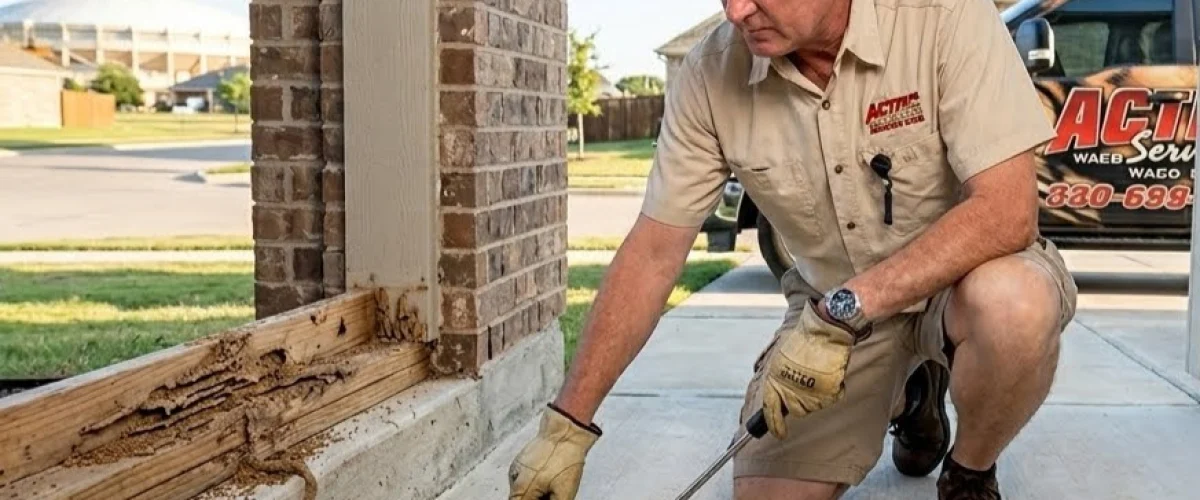
Central Texas weather doesn’t do things halfway. One month you’re dealing with drought-cracked soil, and the next you’re watching water pool against your foundation after a night of relentless rain. For Waco homeowners, that swing from dry to soaked isn’t just a headache for your yard and gutters — it’s one of the biggest triggers for termite activity all year.
Termites need moisture to survive, and heavy rain or flooding hands them exactly the conditions they’re looking for, often right at the base of your home. This guide walks through why flooding and heavy rain create such a serious termite risk in Waco, what to do in the days immediately afterward, the warning signs to watch for in the weeks that follow, and how to build lasting protection so the next storm doesn’t turn into a termite problem.
Why Rain and Flooding Trigger Termite Activity in Waco
The termite species responsible for the vast majority of structural damage in Central Texas is the subterranean termite. As the name suggests, these termites live underground in soil-based colonies and depend on consistent moisture to survive. Under normal conditions, they travel from the soil into a structure through narrow mud tubes, seeking out wood to feed on while staying protected from open air and predators.
Heavy rain and flooding change the entire equation. When the ground becomes saturated, existing termite colonies are pushed toward higher, drier ground to avoid drowning — and a home’s foundation, crawl space, or wall cavities often become exactly that refuge. At the same time, flooding and prolonged rain soak into siding, deck posts, fence lines, and any wood making contact with the soil, softening it and making it far more appealing to termites than it would be during a dry stretch. Excess moisture around a foundation can also weaken the soil barrier that pest control treatments rely on, creating small gaps that termites can exploit.
In short: flooding doesn’t just wash debris into your yard. It actively drives displaced termite colonies toward your home while simultaneously making your home’s wood more attractive and more vulnerable.
Immediate Steps to Take After Flooding or Heavy Rain
The first 48 to 72 hours after a significant rain event are the most important window for reducing your termite risk. Acting quickly limits how much moisture soaks into your home’s structure and removes the conditions termites are drawn to before they have a chance to settle in.
1. Dry Out Your Home and Crawl Space as Fast as Possible
Run fans and dehumidifiers in any area that took on moisture, particularly crawl spaces, basements, and garages. The faster you bring humidity levels back down, the less appealing that space becomes to both termites and the wood-decaying fungi that often accompany them.
2. Clear Away Wet Debris From Around the Foundation
Remove any waterlogged wood, cardboard, mulch, leaf piles, or storm debris from around your home’s perimeter. Wet organic material sitting against your foundation is essentially a welcome mat for termites, giving them both food and moisture in one convenient spot.
3. Inspect for New Cracks or Gaps
Flooding and saturated soil can shift foundations slightly and open up small cracks or gaps around pipes and utility penetrations that weren’t there before. Walk the exterior of your home and seal anything you find, since these are prime termite entry points once the ground dries out again.
4. Check Gutters and Downspouts
Make sure gutters are clear and downspouts are directing water well away from your foundation rather than letting it pool at the base of your home. Standing water next to your foundation keeps the soil saturated far longer than it needs to be.
5. Address Standing Water Under and Around the Home
If water is pooling in your crawl space or against your slab, look into regrading the soil around your home or adding drainage solutions so water moves away from the structure rather than settling beneath it.
6. Schedule a Professional Inspection
After any significant flooding or an extended stretch of heavy rain, it’s worth having a pest control professional inspect your home specifically for termite activity. Trained inspectors can spot early warning signs in crawl spaces, foundation walls, and structural wood that most homeowners would miss, and catching activity early can be the difference between a simple treatment and a costly structural repair.
Warning Signs to Watch for in the Weeks That Follow
Termite activity doesn’t always show up immediately after a flood — colonies often take some time to settle into a new area and begin actively feeding. Keep an eye out for these signs over the following weeks and months:
- Mud tubes running up foundation walls, piers, or crawl space supports, which termites build to travel safely between the soil and your home’s wood
- Hollow or spongy-sounding wood when you tap on beams, floor joists, deck posts, or fence rails
- Discarded, translucent wings collecting near windowsills, doors, or light fixtures after a termite swarm
- Swarms of winged termites, particularly in spring, emerging from the ground near your foundation or from cracks in exterior wood
- Blistering or bubbling paint on wood surfaces, which can indicate moisture and termite activity building up just underneath
- Doors or windows that suddenly stick, which can point to wood swelling or hidden structural damage
- A persistent musty smell in crawl spaces or basements, often a sign that moisture levels remain high enough to support both termites and mold
If you notice any of these, don’t wait for the next inspection cycle. Termite colonies can cause meaningful structural damage in a surprisingly short window once they’re established, and by the time visible damage appears, feeding has often been going on for a while already.
Building Long-Term Termite Protection for Future Storms
Waco’s weather pattern of dry stretches followed by sudden heavy rain isn’t going away, so the goal isn’t just cleaning up after one flood — it’s building a home that’s resilient to the cycle itself.
Maintain a Continuous Barrier Treatment
Liquid termiticide barriers applied around a home’s perimeter create a chemical zone that termites can’t cross undetected, and professionally applied barriers typically remain effective for several years. After a major flood, it’s worth having your barrier checked, since saturated soil and erosion can occasionally compromise a treatment zone that was previously solid.
Consider a Baiting System for Ongoing Monitoring
Baiting systems placed strategically around the property allow worker termites to carry bait back to the colony, gradually eliminating the whole colony rather than just the termites near the surface. Many of these systems are monitored on an ongoing schedule, which means increased activity after a storm is more likely to be caught early.
Improve Drainage Permanently
If your property regularly experiences standing water near the foundation after storms, addressing the underlying drainage issue — through regrading, French drains, or gutter extensions — does more for long-term termite prevention than any single treatment, since it removes the moisture problem at its source rather than just responding to termites after they arrive.
Keep Wood-to-Soil Contact to a Minimum
Fence posts, deck supports, and any structural wood that sits in direct contact with soil are far more vulnerable after repeated flooding. Where possible, use treated lumber or metal post supports that keep wood elevated above ground contact.
Schedule Routine, Not Just Reactive, Inspections
An annual termite inspection, with an additional check after any unusually heavy rain season, keeps small issues from turning into major ones. Many pest control providers include this kind of ongoing monitoring as part of a long-term protection plan specifically because Central Texas weather makes one-time treatments less reliable on their own.
Frequently Asked Questions
Does flooding always cause a termite infestation? Not always, but it significantly raises the risk. Flooding displaces existing colonies toward drier ground and softens wood around your home, both of which make an infestation considerably more likely in the weeks and months that follow.
How soon after a flood should I have my home inspected? Ideally within the first few weeks after water levels recede and your property has had a chance to dry out, since this gives an inspector the best opportunity to catch new activity before it becomes established.
Is termite damage from flooding covered by homeowners insurance? Generally no. Most homeowners insurance policies treat termite damage as a maintenance-related issue rather than a covered loss, even when flooding was a contributing factor, which makes prevention and early detection especially important financially.
Can I dry out my crawl space myself, or do I need a professional? Basic steps like running fans and dehumidifiers can be handled by most homeowners, but if there’s significant standing water, structural moisture, or visible mold, it’s worth bringing in a professional for both moisture remediation and a termite-specific inspection.
Are subterranean termites the only concern after heavy rain in Waco? They’re the primary concern, since they depend directly on soil moisture, but persistent dampness can also encourage wood-decaying fungi and other wood-destroying pests like certain beetles, which is another reason drying out affected areas quickly matters.
Final Thoughts
Heavy rain and flooding are simply part of living in Central Texas, but they don’t have to translate into a termite infestation if you act quickly and stay consistent with prevention afterward. Drying out your home fast, clearing wet debris, sealing new gaps, and bringing in a professional for a post-storm inspection all work together to close the window termites rely on. Combine that with a solid long-term barrier or monitoring system, and your home stays protected no matter what the next storm season brings.